
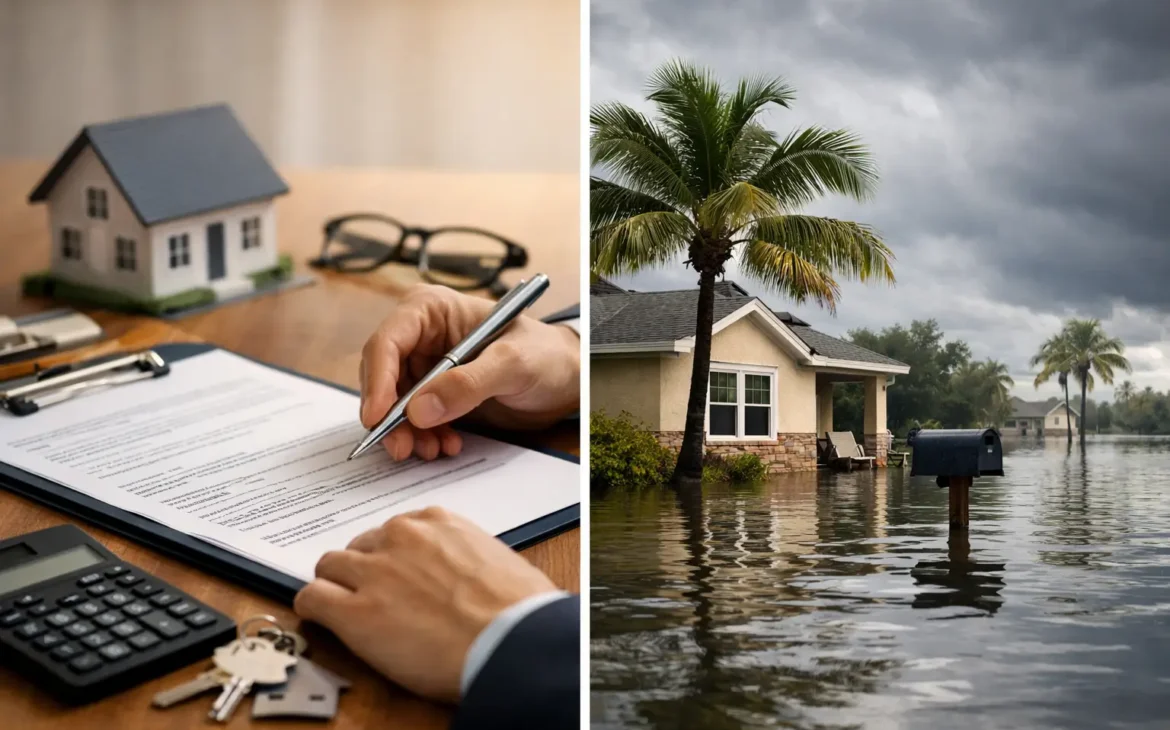
A few inches of water can create a six-figure problem. Flooring, cabinets, electrical systems, appliances, inventory, and personal belongings can all be damaged at once – and a standard homeowners policy typically does not pay for flood damage. Florida flood insurance is designed for that gap, giving property owners a separate source of protection when water affects more than just one room.
For Florida homeowners, investors, and business owners, the question is not simply whether a property sits near the coast. Heavy rain, overwhelmed drainage systems, storm surge, and rising waterways can all cause flooding. The right policy depends on the building, its elevation and location, the lender’s requirements, and how much financial risk you are prepared to retain.
Why a Homeowners Policy Usually Is Not Enough
Many people assume water damage is water damage. Insurance policies draw much finer distinctions. A homeowners policy may cover certain sudden, accidental losses, such as water released by a burst pipe. It generally excludes a flood, which is broadly defined as water inundating normally dry land and affecting two or more properties or two or more acres.
That distinction matters after a hurricane, tropical storm, or intense rain event. If wind damages a roof and rain enters through the opening, the homeowners policy may respond to the wind-related damage, subject to the policy terms and deductible. If water rises from the ground, flows into the home, or enters because streets and drainage systems are overwhelmed, flood coverage is usually the policy that matters.
A separate flood policy can protect the structure, eligible personal property, or both. It is not an add-on that should be assumed to be included with home insurance. It must be reviewed and purchased on its own.
What Florida Flood Insurance Can Cover
Flood insurance is available through the National Flood Insurance Program, often called the NFIP, and through private insurance carriers. Coverage details vary by policy, but a residential policy may help pay to repair or replace covered building components such as the foundation, electrical and plumbing systems, HVAC equipment, water heaters, built-in appliances, flooring, walls, and permanently installed cabinets.
Contents coverage is typically separate. It can help protect eligible belongings, including furniture, clothing, electronics, portable appliances, and certain valuables. That separation is easy to overlook. A homeowner who purchases building coverage only may have help repairing the house but little or no coverage for the items inside it.
NFIP residential limits are generally up to $250,000 for the building and $100,000 for contents. Those limits may not be enough for a higher-value Florida home, a renovated property, or a residence with extensive furnishings. Private flood insurance may offer higher limits and, in some cases, more flexible options. The better choice depends on the policy language, lender acceptance, price, and the protection needed – not just the lowest premium.
For businesses, flood damage can affect the building, equipment, inventory, furniture, and tenant improvements. Commercial flood coverage can be especially valuable for restaurants, retail stores, offices, warehouses, and landlords whose income depends on a property remaining usable. Business owners should also ask whether a policy addresses lost income or extra expenses. Standard NFIP coverage is more limited in this area, while some private options may offer broader protection.
Coverage Has Limits Below Ground
Flood policies have important restrictions, particularly for basements and enclosed areas below elevated homes. Certain structural items may be covered, but finished walls, flooring, personal belongings, and many improvements in these spaces may not be. Storage areas, garages, crawl spaces, and ground-level enclosures deserve special attention when reviewing a policy.
This is one reason a quick online quote is not always enough. The layout of the property can change what is protected and what remains your responsibility after a loss.
Do You Need Coverage Outside a High-Risk Zone?
A federal lender may require flood insurance when a building securing a mortgage is located in a designated Special Flood Hazard Area. But a lender requirement is not the same thing as a complete risk assessment. Flooding can happen well outside those mapped areas, especially where development changes drainage patterns or where intense rainfall outpaces local infrastructure.
Properties in lower-risk zones often have more affordable coverage opportunities. That can make voluntary coverage a practical decision rather than a last-minute reaction to a forecast. Waiting until severe weather is approaching can be risky because flood policies commonly have a waiting period before coverage takes effect. There are exceptions, including certain loan-related situations, but they should never be assumed.
The most useful question is not, “Am I required to buy it?” It is, “Could I afford to repair this property and replace what is inside if floodwater entered tomorrow?” If the answer is no, flood insurance deserves a serious review.
NFIP vs. Private Flood Insurance
The NFIP remains an important option for many property owners, particularly where private choices are limited. It provides a familiar framework and is widely accepted by lenders. However, its coverage limits and policy terms may leave gaps for homes with higher rebuilding costs or businesses with substantial property at risk.
Private flood insurance can sometimes provide higher limits, broader contents coverage, shorter waiting periods, or additional living expense coverage if a home becomes uninhabitable. Those advantages are not universal. Private policies can differ significantly in exclusions, deductibles, renewal terms, claims handling, and eligibility rules.
Price matters, but comparing premiums alone can be misleading. A less expensive policy with a high deductible or a lower building limit may shift more of the loss back to the property owner. Conversely, a policy with broader protection may be worth the additional cost when it protects a primary residence, a rental property, or a business that cannot easily absorb downtime.
Questions Worth Asking Before You Buy
Before selecting a policy, confirm whether the building limit reflects the current cost to repair or rebuild the structure after a flood. Review contents coverage separately, particularly if the home has upgraded furnishings, home-office equipment, or valuable personal property.
Also ask about the deductible, waiting period, exclusions for lower-level areas, and whether temporary housing or business-income losses are covered. If the property is financed, verify that the policy meets the lender’s requirements. For rental homes and commercial buildings, clarify who is responsible for insuring the structure, improvements, inventory, and tenant-owned property.
It is also wise to look at the broader insurance picture. Wind, homeowners, condo, landlord, and umbrella policies each address different risks. Coordinating them helps prevent a situation where every policy appears adequate on its own, but a major loss exposes an expensive gap between them.
How to Compare Coverage With Confidence
Flood insurance pricing is influenced by factors such as the property location, flood zone, elevation, foundation type, occupancy, replacement cost, coverage limits, and deductible. A neighbor’s premium is not a reliable benchmark for yours. Even homes on the same street can be priced differently.
Start with accurate property information and a realistic estimate of rebuilding cost. Then compare more than one available option when possible. Focus on the protection provided for the premium, not simply the number at the bottom of the quote. An independent agency such as LS Premier can help review available carriers, explain policy differences in plain language, and match coverage to your budget and property risk.
The goal is not to predict every storm. It is to make a clear decision while conditions are calm, so a flood does not turn into a financial setback that follows you long after the water recedes.