
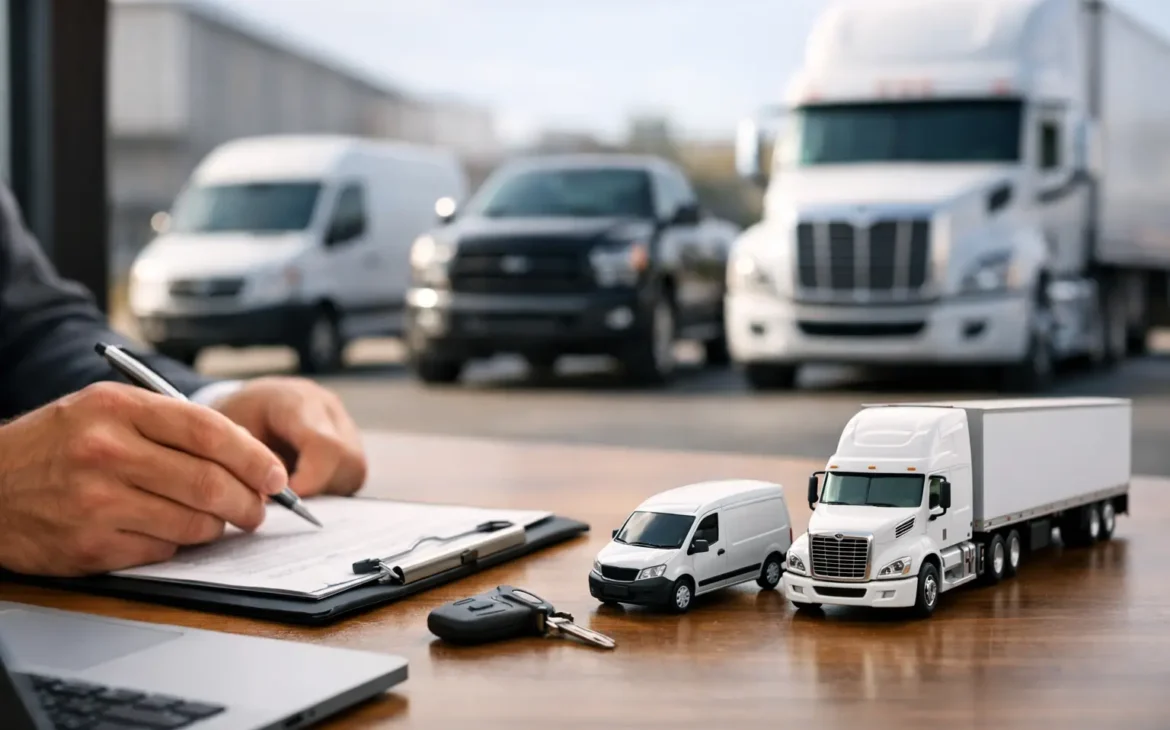
A work vehicle can create a costly problem in seconds. A delivery van backs into a customer’s gate, an employee is injured while driving to a job site, or a contractor’s truck is totaled on the way to pick up materials. Commercial auto insurance is designed to help your business respond when those situations happen – without putting your cash flow, contracts, or hard-earned reputation at greater risk.
For business owners, the right policy is not just about meeting a legal requirement. It is about making sure the vehicles your operation depends on are protected in a way that reflects how they are actually used.
What Commercial Auto Insurance Covers
Commercial auto insurance provides liability and physical damage protection for vehicles used in connection with a business. It may apply to company-owned cars, vans, pickup trucks, service vehicles, box trucks, and other business vehicles, depending on the policy.
Liability coverage is the foundation. If a driver causes an accident, this coverage can help pay for bodily injury or property damage to others, up to the policy limits. It can also help with legal defense costs when a covered claim leads to a lawsuit. For many businesses, liability limits deserve more attention than the minimum required by the state. A serious accident can exceed a basic limit quickly, especially when multiple people are injured.
Physical damage coverage helps protect the vehicle itself. Collision coverage may help repair or replace a covered vehicle after an accident, while comprehensive coverage may help with losses from theft, vandalism, fire, weather, or an animal strike. If a vehicle is financed or leased, the lender often requires these coverages.
A policy can also include uninsured and underinsured motorist coverage, medical payments coverage, rental reimbursement, roadside assistance, towing, and other options. The availability and requirements vary by carrier and state. The goal is not to add every available feature. It is to choose protection that makes practical sense for the vehicles and financial risks involved.
When a Personal Auto Policy May Not Be Enough
A common coverage gap begins with a personal vehicle used for work. Occasional commuting is generally different from using a vehicle to deliver products, transport tools, carry clients, or visit multiple job sites each day. Personal auto policies often have limitations or exclusions for business use, particularly when driving is central to the work being performed.
For example, a real estate professional driving to showings may have different needs than a florist making daily deliveries. A contractor transporting expensive equipment has a different exposure than a consultant who occasionally visits clients. Ridesharing, food delivery, courier work, and transporting passengers can create additional restrictions that require careful review.
The name on the title does not always settle the issue. A vehicle personally owned by a business owner may still need commercial coverage if it is regularly used for business purposes. On the other hand, some limited business use may be allowed under a personal policy. The details matter, which is why it helps to explain the full picture before selecting coverage.
Choosing Commercial Auto Insurance for Your Operation
A useful commercial auto insurance policy starts with how your business operates, not with a generic quote form. An insurance advisor should ask who owns the vehicles, who drives them, where they travel, what they carry, and how often they are on the road.
Start with the right vehicles and drivers
List every vehicle used in the business, including owned, leased, financed, rented, and employee-owned vehicles used for company errands. Be clear about vehicle type, weight, value, modifications, and any permanently installed equipment. A standard pickup and a pickup outfitted with specialized tools may need to be evaluated differently.
Drivers matter just as much. Insurers commonly consider age, licensing history, claims history, driving records, and experience with the vehicle type. Allowing an unlisted employee or a family member to drive without first reviewing the policy can create an unnecessary coverage problem.
Match limits to the risk, not just the minimum
State minimum liability requirements are a starting point, not a business risk plan. A business with significant assets, client contracts, or regular highway travel may need higher limits. Some vendors, landlords, and commercial clients also require proof of specific liability limits before allowing work to begin.
Higher limits raise premium costs, but they can provide more meaningful protection when a major claim occurs. Many business owners also consider a commercial umbrella policy for additional liability protection above underlying auto and business liability limits. Whether that is appropriate depends on the business’s exposure, assets, and contractual obligations.
Consider the cost of downtime
After an accident, the loss is not limited to repairs. Can your team still make service calls? Can you complete deliveries? Will you need to rent a replacement vehicle immediately? Rental reimbursement and towing coverage may be especially valuable for businesses that cannot afford to have a vehicle out of service for several days.
This is also where deductibles require a practical decision. A higher deductible can reduce the premium, but it means your business will pay more out of pocket after a covered physical damage claim. Choose a deductible your business could reasonably handle without disrupting operations.
Coverage for Hired, Non-Owned, and Employee Vehicles
Not every business exposure involves a vehicle titled to the company. Hired and non-owned auto liability coverage can be important when employees use personal cars for business errands or when the business rents vehicles.
Imagine an office employee picking up supplies in their own car, or a manager renting a van for a trade show. The driver’s personal policy or the rental company’s coverage may not fully protect the business if an accident happens while conducting company business. Hired and non-owned auto coverage is designed to address certain liability exposures in these situations. It generally does not replace physical damage coverage for an employee’s personal car, so the details should be reviewed carefully.
This coverage is often affordable, but it should not be assumed to be automatic. Businesses that reimburse mileage, send employees between locations, or ask staff to run errands should discuss it with their insurance advisor.
Factors That Affect Your Premium
Commercial auto premiums are based on more than the number of vehicles. Carriers may consider your industry, vehicle type, coverage limits, deductibles, garaging location, annual mileage, radius of operation, driver records, claims history, and whether the vehicles carry specialized equipment or cargo.
A plumbing company with several service vans may be rated differently from a catering business with delivery vehicles, even if both have similar vehicle values. Long-distance travel, frequent driving in dense traffic, and young or inexperienced drivers can also affect pricing.
Cost control should not mean stripping away coverage that would matter after a loss. Better approaches include maintaining driver screening practices, reviewing motor vehicle records, documenting vehicle maintenance, limiting unauthorized drivers, and reassessing the policy as the business adds vehicles or changes operations. Keeping accurate information on file can also prevent unpleasant surprises at claim time.
Common Mistakes That Create Coverage Gaps
Business owners are busy, and insurance details can be easy to postpone. Still, a few oversights come up repeatedly. One is assuming a personal policy covers all work-related driving. Another is forgetting to add a newly purchased vehicle or newly hired driver promptly.
Businesses also sometimes underestimate vehicle values, fail to update coverage after adding expensive equipment, or select low liability limits solely to reduce the premium. A policy that looks inexpensive can become very costly if it leaves the business exposed after a serious claim.
Reviewing coverage at renewal is helpful, but changes should also trigger a conversation during the year. Buying another vehicle, expanding into a new service area, hiring drivers, beginning deliveries, or signing a contract with insurance requirements can all change what your business needs.
Get Advice Built Around Your Business
Comparing commercial auto policies involves more than comparing prices. One carrier may be more competitive for a small local fleet, while another may better fit a business with higher liability requirements, specialized vehicles, or employees who use personal cars for work. The least expensive quote is only a good value if it protects the risks your business actually faces.
LS Premier helps business owners compare options from multiple carriers and understand the coverage choices behind the price. A clear conversation about your vehicles, drivers, and daily operations can make it easier to build protection that supports your budget without leaving obvious gaps.
Your vehicles help keep your business moving. Give their insurance the same attention you give the work they make possible.