
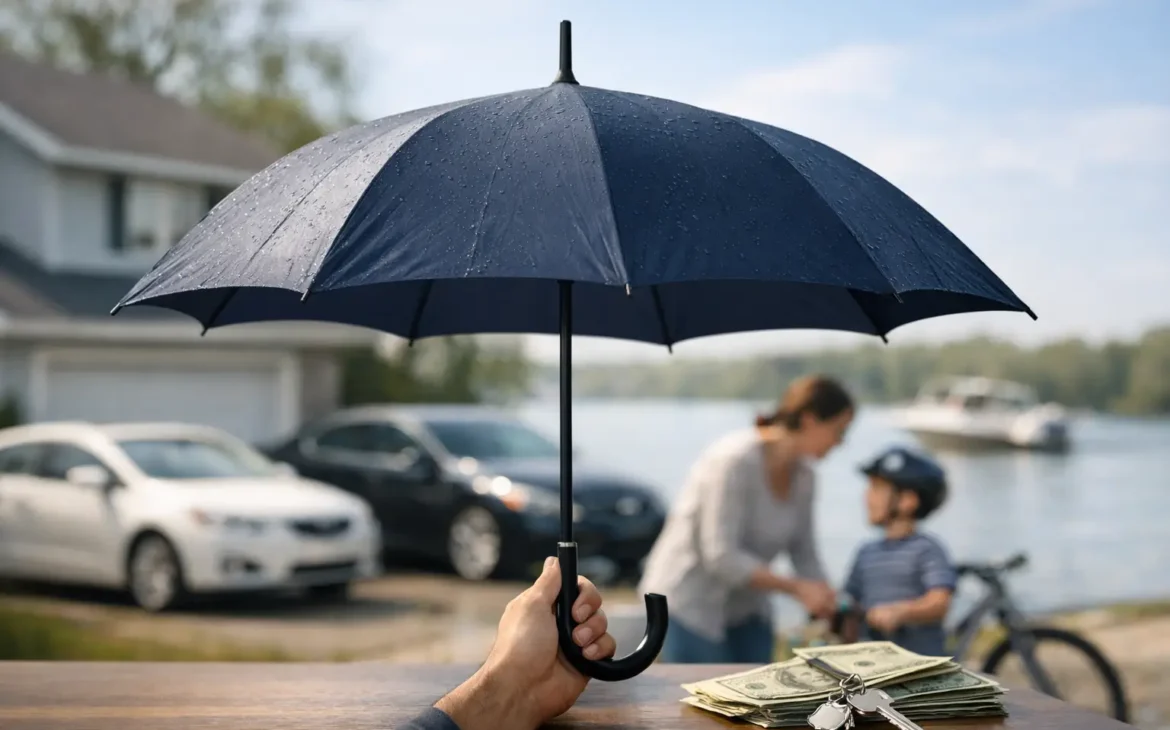
A serious accident can create costs far beyond the limits on a standard auto, home, or business policy. So, what does umbrella insurance cover when a claim becomes larger than your primary coverage can handle? In most cases, it provides an extra layer of liability protection that can help protect your savings, income, property, and future financial security.
Umbrella insurance is not designed to cover routine repairs or everyday losses. It is designed for the high-cost situations that can arise when you are legally responsible for another person’s injuries, property damage, or certain personal liability claims. For families, property owners, and business owners, that added protection can be an important part of a well-rounded insurance plan.
What Does Umbrella Insurance Cover?
A personal umbrella policy generally begins paying after the liability limit on an underlying policy, such as your auto or homeowners insurance, has been exhausted. Coverage is commonly available in $1 million increments, although higher limits may be appropriate for households with substantial assets, rental properties, teen drivers, or greater exposure to liability risks.
For example, imagine you cause a multi-car accident and several people are seriously injured. If the total settlement and legal costs reach $1.3 million but your auto policy provides $500,000 in liability coverage, an umbrella policy may cover the remaining eligible amount, subject to its terms and limits.
The specific coverage varies by carrier and policy, but umbrella insurance commonly helps with liability claims involving:
- Bodily injuries to other people when you are legally responsible
- Damage to someone else’s vehicle, home, or other property
- Legal defense costs for covered lawsuits
- Incidents at your home, including certain guest injuries
- Liability connected to rental properties you own
- Personal injury claims such as libel, slander, or defamation, when included by the policy
This is liability coverage, not coverage for your own injuries or damaged belongings. Its purpose is to address the financial consequences when someone else claims you caused them harm or loss.
How Umbrella Coverage Works With Auto and Home Insurance
Umbrella insurance does not replace your existing policies. Instead, it sits above them. Your auto, homeowners, condo, renters, or landlord policy is usually the first line of defense. Once the applicable liability limit has been used, the umbrella policy may take over.
That structure means insurers typically require certain minimum liability limits on the policies beneath the umbrella. For instance, a carrier may require you to maintain a specified amount of auto liability protection and homeowners liability coverage before it will issue umbrella coverage. The exact requirements differ, which is one reason it helps to review all policies together rather than buying coverage in isolation.
Consider a common home scenario. A guest slips on an icy walkway, suffers a major injury, and files a lawsuit alleging that the property was not properly maintained. Your homeowners policy may respond first, up to its liability limit. If the claim exceeds that amount, an umbrella policy may provide additional eligible coverage.
The same can apply to a dog bite, a backyard accident, or damage caused by a family member while driving. The details matter. Certain dog breeds, business activities, recreational vehicles, and other exposures may have restrictions depending on the carrier, so an umbrella policy should be reviewed before a claim happens.
Legal Defense Can Be a Major Benefit
Even when a lawsuit is ultimately unsuccessful, defending it can be expensive. Attorney fees, court costs, expert witnesses, and time away from work can add up quickly. Many umbrella policies provide legal defense for covered claims, often in addition to the policy limit. However, policy language matters, especially when allegations include both covered and excluded conduct.
A lower-cost umbrella policy should not be judged on price alone. Reviewing how defense costs are handled, what exclusions apply, and whether all household members are properly listed can make a meaningful difference.
What Umbrella Insurance Usually Does Not Cover
Umbrella coverage is broad, but it is not unlimited. It generally does not pay for losses that are covered by another type of policy or that arise from intentional, illegal, or excluded conduct.
For example, a personal umbrella policy typically does not cover damage to your own car, house, or personal possessions. Those losses fall under collision, comprehensive, homeowners, condo, or renters coverage. It also does not cover your own medical expenses after an accident. Health insurance, medical payments coverage, personal injury protection, or uninsured motorist coverage may be relevant instead.
Intentional harm is another key exclusion. If a person knowingly causes injury or property damage, insurance is unlikely to provide protection. Contract disputes, professional errors, and business-related claims also usually require separate coverage rather than a personal umbrella policy.
Some risks require special attention. If you own a rental property, employ household staff, serve on a nonprofit board, have a trampoline or pool, own watercraft, or have a newly licensed driver in the household, tell your insurance advisor. These do not automatically make umbrella coverage unavailable, but they can affect eligibility, pricing, and the coverage you need.
Personal Umbrella vs. Commercial Umbrella Insurance
Personal umbrella insurance is intended for individuals and families. It extends qualifying personal liability coverage above policies such as auto, home, and landlord insurance.
Commercial umbrella insurance serves a different purpose. It can provide additional liability limits above qualifying business policies, including general liability, commercial auto, and employer’s liability. A business owner who causes a serious loss through company operations could face a claim that exceeds a standard business policy limit, particularly in industries involving vehicles, customers on premises, employees, or significant contracts.
A personal umbrella policy generally will not fill a gap created by business activity. For example, using a personal vehicle for deliveries, operating a home-based business, or renting property through an entity can create coverage questions. Business owners should review personal and commercial exposures together so that one policy is not expected to do a job it was never designed to do.
Who Should Consider Umbrella Insurance?
Umbrella insurance is often associated with wealthy households, but asset level is only part of the picture. Anyone can be sued for more than the value of their current bank account. Future wages, home equity, investments, and other assets may be at risk following a major judgment.
You may want to consider an umbrella policy if you own a home, have savings or investments, drive regularly, have teenage drivers, entertain guests, own rental property, or have a public-facing lifestyle that increases the chance of a personal injury claim. It can also be a sensible option for families who want higher liability limits without dramatically increasing the limits on every underlying policy.
The right amount depends on your assets, income, activities, and risk tolerance. A household with one vehicle and few assets may need a different conversation than a family with several drivers, a pool, a rental home, and growing retirement savings. There is no one-size-fits-all limit, and the cheapest option is not always the most appropriate one.
How to Choose the Right Umbrella Policy
Start by reviewing the liability limits already included in your auto, home, renters, condo, or landlord coverage. Then look for gaps between those limits and the financial exposure you would face after a serious accident or lawsuit.
Next, make sure the umbrella policy recognizes every relevant risk. All household drivers, vehicles, residences, rental properties, and eligible recreational vehicles should be disclosed. Omitting a vehicle or driver can create problems with eligibility or a future claim.
Finally, compare more than the premium. Look at required underlying limits, exclusions, available policy limits, personal injury coverage, defense provisions, and carrier service. An independent agency can compare options across carriers and help coordinate the underlying policies that support the umbrella.
For Illinois and Florida households and business owners, local liability risks can look very different, from dense traffic and rental property exposure to pools, visitors, and severe weather-related property activity. LS Premier can help review your current protection and compare umbrella coverage options built around your actual needs. A brief conversation now can help ensure that one unexpected claim does not have an outsized impact on the life and assets you have worked hard to build.